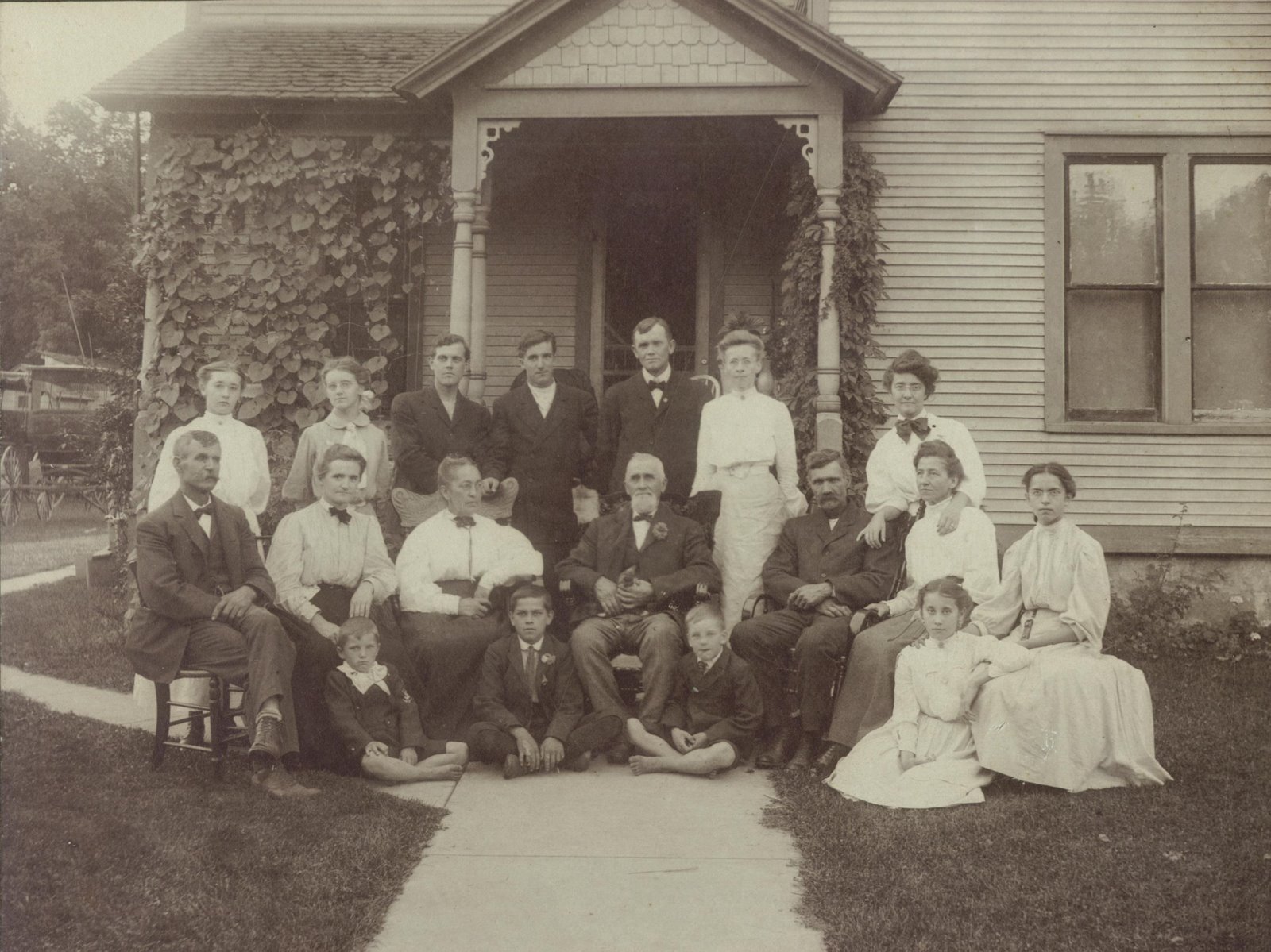
Before I got seriously involved with today’s community of Christian writers, a number of my friends and family read Tangled Strands. I readily admit that the fact that they liked the story (one even admitted to shedding tears over the ending) is what gave me the motivation to bring it up to today’s standards in order to see it published. In fact, though they are polite about it, I’m pretty sure some of them have never understood why I had to “mess with it.”
Today I was going back over a seven-point framework developed by another author. He calls is the “seven beats of your story,” and we in our local writers’ group were challenged to apply it to our “work in progress” (aka WIP). I forgot that I worked my way through the whole thing several weeks ago, so it was most interesting to read my analysis. Perhaps the most interesting thing was at the very end after I’d made a stab at the seven points. This is what I wrote:
A BIG questions is this: If I try to pour my story into a mold made to fit all the “rules” and style matters of today, am I going to improve my story or destroy it?
Ouch! But it is a fair question, and it deserves an answer. There are two issues main to address in the answer.
First, I can truthfully say I am confident the end result is going to be better for all this work I am putting into it. I’ve been sharing some of the reasons with you as we go along in this blog. Some I’m electing not to get into because I don’t want to bore you to death. In fact, it has been an encouragement to me, as I’ve worked on this new beginning, that I never find myself wishing to go back to the original or wishing I hadn’t decided to make the change. So many things in that old beginning had bothered me for years, and they are now gone.
Another important issue is that, in all the things the writers teach about what makes good fiction (and not just in this day and age), they all agree on one thing and say it over and over: “It is your story, and you have to tell it in your voice. All of that supersedes any rules.” Admittedly, that makes for a challenge—to follow the principals of good fiction, to learn from what others have learned along the way, and yet to apply all of it in your own “voice” without destroying your story. (Author’s “voice” is not easy to explain, but it is related to the unique way in which one uses language.)
Another thing that everyone agrees about is that “story is king.” In other words, if the author tells a story that captures imagination and holds readers’ attention, that is more important than whether the author followed a bunch of rules.
So that is my challenge, and I’m doing my best to walk that tightrope between following proven methods and staying true to my story and my own writing style. Feel free to say a prayer for me after reading this (smile).
Tuesday, November 4, 2008

Wednesday, October 29, 2008
Of Seasons and Snags
When I woke up this morning, I decided I would like to live in Hawaii. Why today? Because it was 25 degrees outside our house, and my beautiful summer flowers came to the end of their lives. The first hard freeze of the winter is always a sad milestone for me because I love my flowers. Fortunately, I’ll have a few more days, maybe weeks, because I have five portable pots with lovely New Guinea impatiens. They have been in the house the last three nights and will get to go out again for the end of this week because the weather is going to be nice again.
Every year I have to remind myself afresh that the seasons are a totally scriptural thing. God ordained them, and they have their purpose in our world and our environment. Since I’ve spent two segments of my life in the tropics, I’m not always sure what those purposes are, but I accept that God mandated seasons for certain parts of our world. In addition, this is a good time to remind myself that I’m glad I don’t live northern Minnesota or Canada.
Today most of my time on Tangled Strands was spent going back and trying to work out the little riddles and knots I had left along the way. I always write notes to myself as I write fiction. I’ve usually done it in bright blue text (I imagine one of the reasons I like flowers so much is because I like color so much). But this week I’ve discovered how to use the Comments feature in my Microsoft Word software. With a couple of clicks, I can write my notes so they appear in the margin rather than as part of the text, and they don’t effect the word count of my text.
So when I’m writing away and I come to a snag, it works better to leave a note about the snag and get back to it later. I find that more effective than stopping my train of thought to work out a kink when it first happens. Some of those today were “simple”—as in “not complex,” but not necessarily easy to solve. One of them, for example, was about the phone in the story. In a couple of places I had the phone in the kitchen, but in another scene, I have a main character working in the kitchen, deliberately making noise so she didn’t eavesdrop on the phone conversation in another room. Remember, this is the 1950s when we didn’t have phones in multiple rooms like we do today. Like I said, it wasn’t complex, but that didn’t make it easy to resolve. It turned out to be, not a matter of figuring it out, but rather of deciding which I was willing to give up. I gave up the phone in the kitchen.
Others snags were about word choice. One was needing to look up the history of trucking to see if over-the-road truck driving was a viable career in those days. Another was a whole section I needed to rewrite.
Whatever it was, it was progress.
Saturday, October 25, 2008
Conveying Truth Without Preaching
I’m going to take a break today from talking about my progress (or lack of it) with Tangled Strands and talk about some of the changes in Christian fiction over the years, and about one in particular. I’ve referred in this blog to things that have resulted from cultural changes—readers wanting less description, more action, and consistent point of view. The truth is, two or three decades ago, Christian fiction did not have a good reputation at all.
Author and literary agent Ron Benrey in his book The Complete Idiot’s Guide to Writing Christian Fiction (yes, one of those, and it’s really good) writes, “The complaints of critics and book reviewers that Christian fiction was boring, preachy, formulaic, heavy handed, and clumsily written…drove Christian publishers to hire editors who truly understood the craft of fiction. In turn, these editors found writers who could write compelling novels that simultaneously delivered explicit Christian content” (p.24).
He goes on to say, “Editors at Christian publishing companies have set high standards and expect authors to deliver high-quality manuscripts and proposals.” They “quickly reject manuscripts that have weak stories, sloppy prose, poor characterization, tacked-on Christian messages, . . . and careless point of view” (24,25). When I was an editor for Zondervan many years ago, a manuscript came in that had a story my boss thought was worth publishing, but the author had used the book as a platform for propagating the denomination’s theology. There would be a chapter or two of story, and then the characters would sit down and talk theology for a whole chapter. My boss gave the manuscript to me with instructions to cut sixty pages of it, including all the “preaching.”
Tangled Strands doesn't contain any preaching. In fact, it doesn’t even include a church service. It does carry strong Christian messages about forgiveness and God’s sovereignty, but they are woven into the story. Sometimes truths are shared from one character to another, but sometimes a character discovers something or works through a challenge on her own.
It took me a while to appreciate the changes that have come about, and I admit that I thought of them as simply style differences and perhaps whims of current writers. Now that I understand the quality issues better, I have more respect for these changes I am trying to implement. I guess all this effort I’m expending is to try and become one of those who can write a “compelling” novel that still delivers a Christian message. At least I will have tried.
Thursday, October 23, 2008
Where Did the Rhythm Go?
Or Rethinking Who Reads Your Story
I’m sorry to admit that the rhythm I spoke about last time didn’t last, and I’ve been struggling a bit—until today (more on that in a minute). In the meantime, other things have come up that I could have talked about, but I never got myself to sit down and do it. But I’m here now.
The online course from my American Christian Fiction Writers’ group right now is about critique partners and groups. That’s when authors read each other’s work and offer feedback. The two authors teaching it are two I’ve mentioned here before—Deb Raney and Tamera Alexander, and they are gems. They’ve been “crit partners” with each other for five years now (get used to that term; you’re going to hear it here), and a beautiful friendship has resulted for them. Tammy is the one I chose to do my paid critique at the conference last month; Deb did it for me the year before.
One discussion that developed in the class was whether ever to use non-writers, including family members, to read your work. Whereas I had been exposed to the idea that feedback from non-writers’ didn’t count (“your mama’s gonna like your story no matter how bad it is”), these two successful authors and others who chimed in say they definitely use “readers” in addition to those who formally “critique” their work. That was good news because I have valued the opinions and feedback from non-writers over the years, including family members. In other words, there is a place and a need for both. That’s great to hear.
The best news for today is that I think I have come to the “end” of the new beginning of my story. If you haven’t been following this saga, you won’t know what I mean, but that’s okay. It’s not all polished yet, but it is well along to way to that. I feel like I am getting back into that rhythm. What I am going to need now is two or three friends who have never read it before (or not in the last four years) to give it a read and see how it flows and whether it has any gaping holes in it. After a little more work, I’ll be ready to share it with those who have read it before. And of course I’m going to have to get feedback from some “writers” as well.
Tuesday, October 14, 2008
Getting into a Rhythm
First of all, a correction. I’ve no idea what I was thinking when I said I was nine thousand words into my new version last time I posted. I was just over three thousand. Now I’m pushing five thousand.
The important thing to say this time is that I think I am finally getting into a rhythm. One thing helping me is realizing that I don’t have to polish as I go. I’ve been editing and polishing this thing for so long (years!) that I find myself stopping to work on improvement when I see some words aren’t quite right, or I haven’t thought about sensual details, or I’ve put something in that duplicates something I’ve already covered. I’m getting it through my head that I don’t have to fix those things now. I can go back and work on them later. Right now the important thing is to get this new beginning off the ground and catch up to the point where having changed the beginning no longer matters. I haven’t tried to decide where that will be, but I’m confident I’ll recognize it when I get to it.
I had a sweet moment today when I found a perfect spot to slip in a sliver of a scene from the very first page I wrote back in 1975—the spot where Chris tells Mollie he’s thinking of taking a vow against kissing (all the rest of that scene is gone now). I hadn’t worried about losing it, but in this brand new scene I was writing—again with Chris and Mollie in the kitchen, only now they are married—it dawned on me that I had a spot where it fit perfectly.
I have written two brand new scenes yesterday and today, and that has been a pleasure after working over old ones for so long. It’s been nice to find out I can still do that, and I have another one to do coming up next, hopefully yet tonight, depending on how it goes. This is one I side-stepped when I wrote the original. Back then, I chose to let this scene happen “off stage” while I took the reader into the kitchen to watch what was happening there with two other characters. Now I know I have to deal with that scene head on. It lays an important foundation for that slap scene that started this whole change-the-beginning business. I’ll let you know next time how it went.
One another loose end, by the way, in case you remember when I was thinking about making serious changes in some character names . . . I’ve made my decision, and I’m changing only one. It’s not a major one or first name. To keep Baldwin and Barrett from being confusing, Sharon will now have the last name of some of my ancestors I didn’t know about until 2000, the Champlins.
Sunday, October 12, 2008
Of Engines and Emotions

I’m happy to report that I’ve made some progress on getting that engine of creativity going to get this revision off the ground. See the end of the previous blog if you don’t know what I’m talking about. My new version of the story is starting to come together. I’m discovering effective and subtle ways to introduce readers to important things that have gone before. And so far, close to nine thousand words into it, I haven’t spun a single scene of straight back story.
As I’ve mentioned before, I first began getting a handle how to deal with back story when I read Susan May Warren’s Reclaiming Nick two summers ago. So it was a special treat for me to be able to study under Susan for two classes at the conference last month. One was about how to create a “story world” for your readers, and the other was on how to show a character experiencing emotion rather than just naming the emotion. As the introduction to the course said, “Readers don’t want to be told what to think and feel. They want to discover the story along with the characters.”
I learned there are four levels of showing emotion. The easiest is simply to state it. Picture, for example, a gal discovering a large spider in her bathroom sink. She was terrified. A deeper level is to state the emotion along with an action: She jumped back in fear. A third is to use action only and not name the emotion at all: She screamed and slammed the door. The fourth is a little more difficult, and I’ve been too busy working on my story to figure out a good example of how to expand on the emotion with a metaphor.
And yes, I got the Nick and Rafe books of the Noble Legacy series signed (one of my daughters has read them and the other will be soon) as well as the newest one I bought about their sister Stephanie, which I’m reading now. And after class I got my picture taken with Susie.
Thursday, October 9, 2008
Putting Back Story in Its Place
Most people have an idea what “back story” is. In simplest terms, it is anything that happened to the people in your story before your story began. There’s nothing wrong with “back story” itself. Everyone (real as well as fictional) has back story, and many of us are guilty of boring others with tales of our past. In the same way, amateur authors tend to swamp readers with far more back story than those readers are interested in knowing.
As I stated in the right margin here when I started this blog, when I wrote my story all those years ago, the first thing I did after writing an opening scene was to plunge into a fairly thorough back story on my cast of characters. I felt it necessary because their lives were so intertwined. Nevertheless, when I got the thing out in recent times, I found myself worrying about that back story. I wish I could say I was smart enough to figure it out myself because, as I look back, I see that on my own I worried about the very things I now know are brick weights around the neck of a fiction story.
The bottom-line problem with back story is simple. Whenever the author moves to a scene of back story, the main story is stopped in its tracks and the reader’s attention diverted. Even if you make the back story an active scene, you have still stopped the main story and left the reader temporarily hanging. You can get away with snippets of that but not major blocks of it nor repeated blocks of it.
It took me a long time to make peace with what I was hearing about back story. I tried all kinds of things in efforts to make it palatable. I created new scenes with my key characters and broke up the back story among them. I cut some of it—-but I still worried about it. Wouldn’t readers get bored with all this “reflection” the other characters were doing and start wondering when the story was going to get back to Sharon and what happened to her after she skipped town with her charmer?
Of course they would! And I finally got it through my head.
The thing that bothered me most about making this change is that, by starting the story six months later, suddenly everything during that six months became—you guessed it--more back story. I wasn’t a happy camper when I heard over and over that readers don’t need to know nearly as much back story as authors thinks they do. Finally, that is another thing I have made peace with—a little reluctantly, but mostly in a sort of epiphany of understanding when I finally started getting it.
A cool thing I’ve learned in the process is how to use back story to tease the reader and stir up curiosity. Refer to bits of previous events, telling how a key character was affected by it, but don’t spell out what happened until well into the story. I got good practice doing that in those eighty pages that have gone away. For that reason, my efforts on them were not wasted. Hopefully, I am better able to handle what I have to do now because of what I’ve done before. And I’m happy to report that I’ve been able to preserve a couple of my favorite scenes by giving them to another character in a later time and scene.
Subscribe to:
Posts (Atom)